
 English
 中文简体
中文简体Many homeowners struggle to tell whether a door is truly made of solid wood versus engineered or composite materials, especially when the surface has been painted or finished. That’s why questions about how to identify genuine solid wood interior doors and how they compare to Deco paint wooden doors have become common among renovation discussions and home improvement planning.
Why Identification Matters
One homeowner recently asked how to tell if their existing door is solid wood without sawing it apart. This is a practical concern for anyone considering refinishing or repainting interior doors — and it’s especially relevant for Deco paint wooden doors, where surface treatments can obscure construction details. Solid wood doors are built differently from hollow core or solid core alternatives, and understanding these differences can influence decisions about finishing, painting, or replacement.
Look Closely at the Grain and Surface
A clear natural grain pattern that doesn’t look overly uniform is one clue that a door might be solid wood. Real wood grain varies from piece to piece, whereas veneers or composite overlays often exhibit repetitive patterns that don’t reflect natural timber growth. If the grain pattern appears too perfect or repeated, it may be a surface layer rather than a solid material.
Examining the edge or cross-section of a door can also help. When a door slab is truly solid wood throughout, you’ll see continuous grain and texture that match the surface. Without disassembling the door, small cutouts for hinges or hardware may reveal these details.
Evaluate Weight and Sound
Another practical test many homeowners use involves handling the door physically. A solid wood door — whether untreated or finished like Deco paint wooden doors — feels heavier and denser than hollow core or composite panels. Knocking gently on the surface and listening for a deep, firm sound can distinguish solid timber from hollow or engineered cores. This method aligns with common homeowner observations in renovation discussions.
What About Painted Doors?
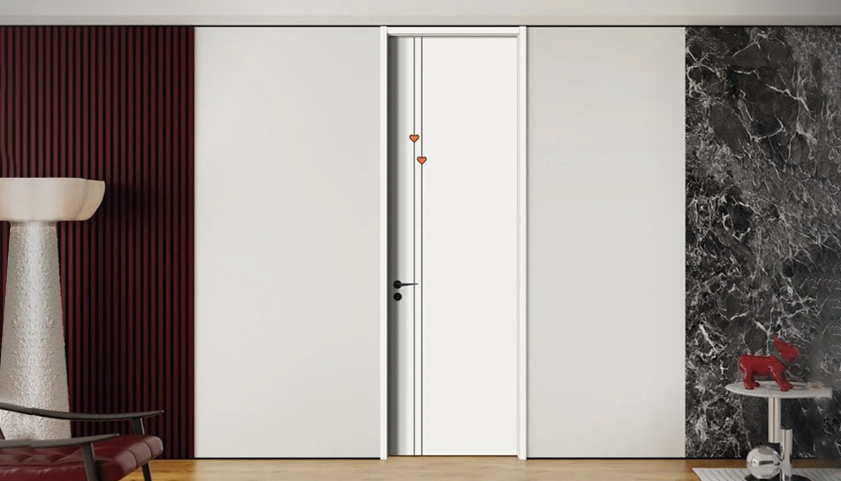
Painting a wooden door can transform its appearance and make wood identification tricky. Deco paint wooden doors are often chosen for contemporary interiors because a painted finish can give a fresh aesthetic while hiding grain irregularities or color variation. Users frequently ask whether paint makes wood harder to identify — and it does, to some degree. Solid wood behind paint still carries the same physical characteristics, but visual cues are simply concealed by the layer of color.
Surface treatments such as high-quality primers and paints help seal wood from moisture and can prolong a door’s life, but they don’t change what’s under the finish. Many professionals recommend peeling back a small hidden area or inspecting through hardware openings to confirm wood type prior to repainting.
Moisture Content and Long-Term Stability
People also wonder how moisture content affects whether a door stays true wood. A solid wood interior door with moisture content properly controlled (usually within 8–12%) is less likely to warp or crack over time. Doors with improperly dried wood can move significantly after installation, especially in environments with fluctuating humidity. This is one reason why identification matters: knowing what type of wood or core you have can help you manage its care and finishing.
Is Veneer or Composite Always a Bad Thing?
Some users worry that non-solid doors are inferior. It’s true that solid wood interior doors have traditional appeal and depth of feel, but well-crafted veneer or engineered options can still provide stability and smooth painted surfaces. For example, an engineered solid wood door or solid core with veneered finish — often used for Deco paint wooden doors — can offer greater dimensional stability in humid environments while still achieving a classic look with paint or lacquer.
This raises a common question: does a veined, painted surface negate real wood value? Not necessarily. Understanding your needs — climate, maintenance preferences, finish style — helps determine whether a fully solid timber door is the right choice or if alternative wood-based doors suffice.
Practical Tips for Buyers
- Ask for moisture content data: Reliable suppliers can provide moisture readings before and after finishing.
- Inspect hardware cutouts: Look through hinge or lock openings to view the interior edge grain.
- Feel the weight: Solid wood doors generally feel heavier and more substantial.
- Consider your finish plan: Painted finishes have different preparation needs than stained timber surfaces.
Identifying whether a door is solid wood — especially behind a painted surface — helps ensure you choose the right product for your style and durability goals. Whether it’s solid wood interior doors with natural grain or custom Deco paint wooden doors built for modern interiors, understanding construction and testing methods gives homeowners the confidence to make informed choices.
