
 English
 中文简体
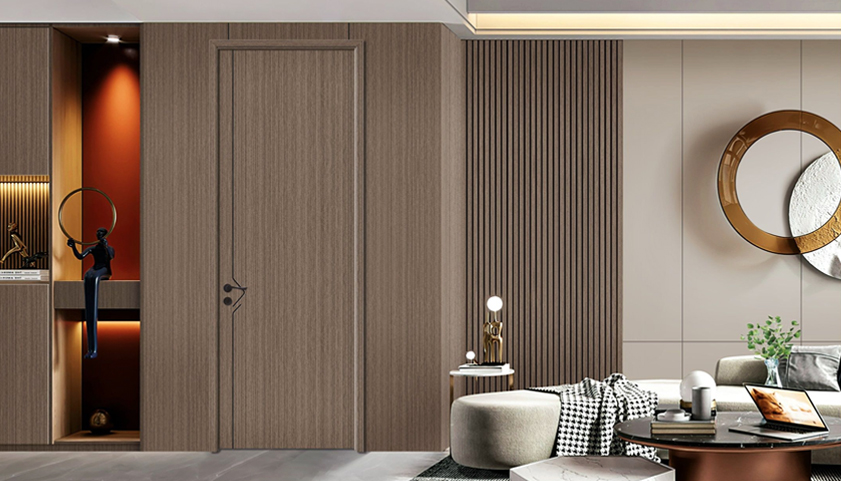
中文简体Deco paint wooden doors are admired for their clean look and ability to match diverse interior styles. Yet many homeowners also wonder about their long-term practicality — especially compared to Solid Wood Interior Doors.
Scratch and Dent Vulnerability
One frequent issue owners raise relates to surface durability. Painted finishes on wooden doors — including Deco paint wooden doors — are not immune to scratches or dents. Wood itself is a softer, organic material, and while paint adds visual appeal, it does not create a hardened protective layer equivalent to laminate or metal finishes. Everyday impacts from furniture, pets, or even regular door use can leave visible marks that are hard to repair.
This means that in high-traffic areas such as hallways, bedrooms, or children’s rooms, the painted surface may show wear more quickly than unpainted or natural wood finishes. Some homeowners find themselves repainting or touching up more often than expected, especially if the original finish experiences abrasion or scuffing.
Sunlight Fading and Environmental Stress
Another common concern revolves around paint fading and cracking over time. Even interior environments are exposed to ultraviolet light through windows, hallways, and nearby reflective surfaces. Over months and years, paint can gradually fade or lose its vibrant color. Heat and sunlight may also accelerate finish degradation.
Furthermore, wood itself expands and contracts with changes in humidity and temperature. Since paint layers are less flexible than the wood beneath, this movement can contribute to micro-cracks or stress lines that gradually develop as the wood adjusts to its environment. This isn’t a flaw specific to a brand or maker — it stems from how natural wood and paint interact under everyday conditions — but it is something many users discover only after some time living with the door.
More Maintenance Than Many Expect
Painted wood doors often require a higher level of ongoing maintenance than simple wood veneer or stained wood finishes. The paint itself may need periodic refreshing, especially in areas of frequent use. Some owners report repainting every few years to maintain a uniform appearance, which adds time and cost over the lifetime of the door.
Maintenance isn’t just about looks — it’s also about protecting the wood beneath. A well-finished paint surface helps seal the wood from moisture penetration, which in turn minimizes warping, swelling, or other dimensional changes associated with moisture shifts. If the paint layer begins to degrade, that protective function becomes compromised, and doors may react more sensitively to the indoor environment.
Weathering and Wood Movement
Some homeowners have noticed that painted wooden doors show signs of joinery separation or paint line cracks over time — particularly where panels and stiles meet. This is often not due to poor craftsmanship but is instead a natural outcome of wood movement. As wood expands and contracts, areas where pieces join can develop slight misalignments or stress lines that eventually show up as lines or cracks in the paint surface.
This phenomenon is sometimes discussed in woodworking and building forums where woodworkers warn that paint on solid wood cannot entirely prevent movement-related stresses, and that such changes are a normal part of wood behavior.
Choosing Between Painted and Natural Finishes
Users comparing Deco paint wooden doors to fully natural or stained Solid Wood Interior Doors often note that natural finishes can be more forgiving of wood movement, because grain and color variation mask small changes more effectively. Natural or stained wood can also be easier to touch up at a local level without repainting an entire surface.
However, this doesn’t mean painted doors are unsuitable; rather, it highlights that owners should enter decisions with realistic expectations about look, maintenance, and how the door will age. Thoughtful finishing techniques — such as using high-quality flexible paint, sealing all edges fully, and controlling indoor humidity — help extend finish life and maintain appearance.
Practical Tips for Owners
- Choose paint systems designed for wood doors with flexibility and adhesion to minimize cracking.
- Seal all edges and ends fully to prevent moisture exchange that stresses both wood and finish.
- Maintain moderate indoor humidity to reduce wood movement stress on the paint layer.
- Expect and plan for occasional touch-ups or repainting over long-term use.
Deco paint wooden doors provide clean style and customization that many homeowners appreciate. Yet it’s also clear that painted wood finishes demand realistic expectations about durability and care. Unlike composite alternatives — which may resist humidity-induced changes — natural wood doors carry inherent variability that interacts with both paint and environment. Understanding both the benefits and limitations of painted finishes helps you plan for long-lasting beauty and performance.
