
 English
 中文简体
中文简体Concerns about laminated wood door panels delaminating are common among homeowners and renovators, especially in areas with fluctuating humidity or extreme temperature changes. Likewise, issues related to the interior wood door frame—such as gaps or warping over time—can contribute to wear and separation of materials. Understanding why delamination happens and how to prevent it can help you protect both the appearance and function of your interior doors.
What Is Delamination?
Delamination refers to the separation of the laminated surface layer from the core panel beneath it. This can occur when the adhesive bond between the laminate and the core weakens or fails. While laminate offers many protective qualities, including resistance to moisture and surface wear, its long-term performance depends heavily on material quality, manufacturing processes and environmental conditions.
People often encounter delamination in doors that are older or exposed to harsh conditions, like high humidity or direct sunlight. In many cases, early signs may appear as bubbling, lifting at edges or visible gaps between layers.
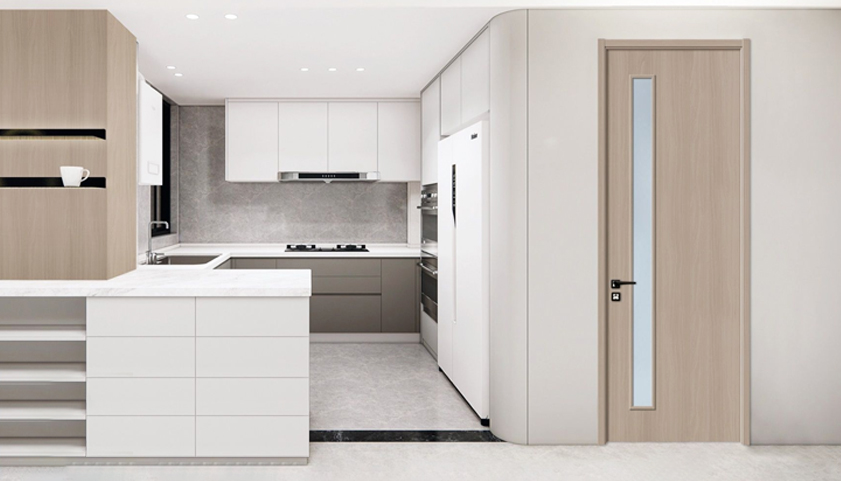
Common Factors That Can cause to Delamination
Several everyday conditions and user experiences point to why laminate layer separation happens:
- Moisture Exposure
Although laminated surfaces provide a shield against moisture, the core materials like MDF or particleboard still absorb water if edges are not sealed well. This can cause to expansion, weakening the bond and causing to peeling.
- Temperature Fluctuations
Heat and cold cause materials to expand and contract at different rates. When the laminate layer and core material move inconsistently, stress builds at the adhesive interface, increasing the risk of delamination.citeturn0search0
- Quality of Adhesive and Materials
Lower-grade adhesives and insufficient surface preparation during manufacturing can undermine long-term bonding. High-quality laminated wood door panels, such as those we produce at ZHEJIANG JIANGSHAN XUPAI DOORS., LTD., use enhanced bonding layers that improve resistance to peeling over time.
- Improper Installation or Fit
An interior wood door frame that is not square or level places uneven pressure on door panels each time they open and close. Over months, this repeated stress can weaken the bond, especially around hinges and edges.
Where Does Delamination more Often Occur?
Users often report delamination starting at key stress points, such as:
- Edges and corners of the door panel, where moisture can penetrate initially
- Around hinge areas, due to repeated flexing
- Near the bottom edge, especially in bathrooms where water exposure is more frequent
These are also the areas where adhesion quality and edge sealing are more critical.
Real-World Experiences and DIY Insights
According to user discussions on renovation forums, some homeowners find that once the laminate begins lifting, the issue often spreads unless addressed early. While small surface bubbles might be temporarily fixed with adhesives or sealants, large areas of separation typically require a replacement of the door itself.
One common forum thread highlights how moisture and climate can slowly compromise laminated surfaces over time—even when the panels appeared fine for years. This reflects how environmental conditions exert long-term stress on layered materials.
Installers and renovation experts also note that ensuring the door frame and jamb are plumb and level during installation reduces undue bending and flexing, which helps maintain adhesion between layers.
How to Protect Against Delamination
To help minimize the risk of laminated wood door panels separating, consider these better practices:
Choose quality materials – Doors made with well-bonded laminated surfaces and engineered cores (e.g., MDF) tend to perform better.
Seal all edges properly – Moisture often infiltrates at edges if not adequately sealed during production or installation.
Control indoor climate – Keeping interior humidity stable helps prevent material movement that can weaken adhesive bonds.
Ensure correct installation – Avoid frame misalignment, as uneven stress accelerates wear at adhesion points.
Alternatives and Comparisons
Some users comparing laminate doors with other finishes note that while laminated options might lack the authentic feel of natural wood, they often provide solid resistance to scratching and moisture compared to painted surfaces, provided the materials are high quality.
Other materials like WPC (wood plastic composite) interior laminated doors offer additional moisture resistance due to their composite nature, which can be ideal for wet environments like bathrooms or kitchens.
Choosing robust door options and ensuring a correct fit with the interior wood door frame are two key factors that influence how well laminated doors hold up over time. At ZHEJIANG JIANGSHAN XUPAI DOORS., LTD., we emphasize both the material quality and manufacturing precision that help mitigate common issues like delamination and surface wear.
